Saffron – often called red gold – is one of the most valuable agricultural products in the world. Its applications extend far beyond cuisine into wellness supplements, pharmaceuticals, and luxury cosmetics. Despite its premium value, saffron production remains highly fragile and constrained.
Between 2024 and 2025, a widening gap between global saffron demand and supply has become increasingly evident. Climate stress, labor shortages, and geographic concentration are now reshaping how saffron is grown, traded, and sourced worldwide.
Global Saffron Market Overview (2024–2030)
Recent market research places the global saffron market value at approximately USD 470-500 million in 2024, with continued growth projected over the coming years. Analysts forecast the market to exceed USD 650 million by 2030, driven by rising demand from food, nutraceutical, and cosmetic industries.
Key Market Data Points
- 2018: USD 350 million
- 2020: USD 390 million
- 2022: USD 430 million
- 2024: USD 475 million
- 2026 (projected): USD 540 million
- 2028 (projected): USD 610 million
- 2030 (projected): USD 690 million
Growth is largely fueled by premium food applications, herbal medicine, and saffron’s expanding use in skincare and wellness formulations.
Why Saffron Supply Is Structurally Limited
Unlike staple crops, saffron cannot be easily mechanized or rapidly scaled. Its supply is constrained by three structural factors.
1. Extreme Labor Intensity
Saffron harvesting is entirely manual. Each saffron flower produces only three red stigmas, and approximately 150,000–170,000 flowers are required to produce one kilogram of dried saffron.
Additional constraints:
- Harvest window: 15–20 days
- Daily hand-harvesting required
- Mechanization: Not commercially viable
As agricultural labor availability declines globally, this bottleneck becomes more severe.
2. Geographic Concentration
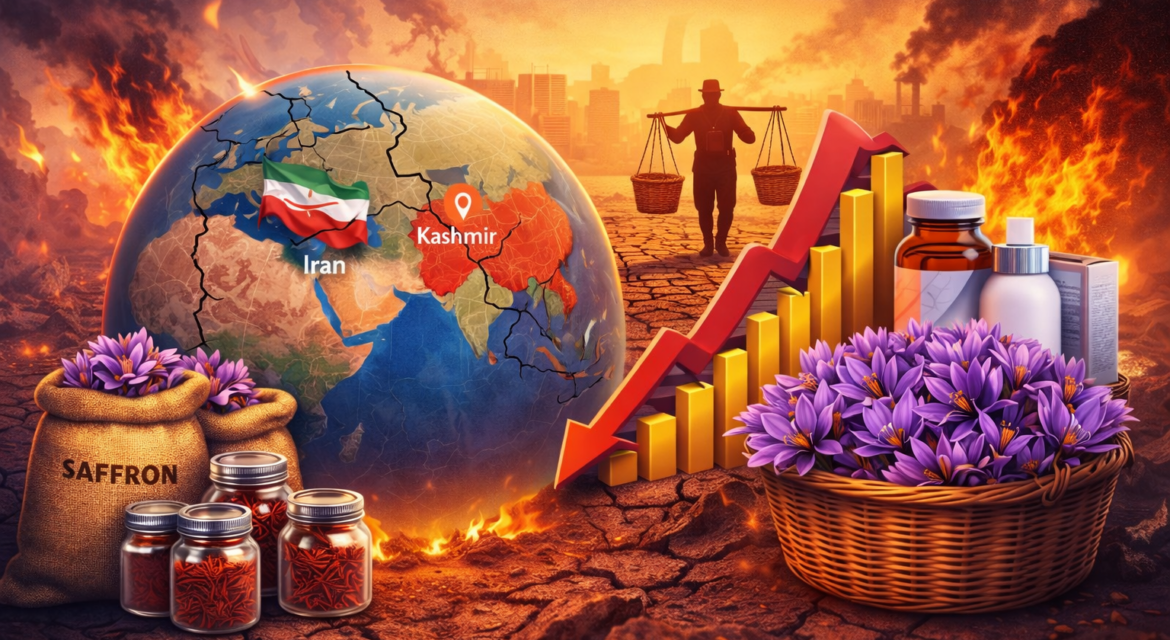
Global saffron production is highly concentrated in a few regions, increasing systemic risk.
Estimated Global Production Share
- Iran: ~75%
- India (Kashmir): ~8%
- Afghanistan: ~6%
- Spain: ~4%
- Other regions: ~7%
This concentration means climate events, water shortages, or geopolitical issues in one region can immediately impact global supply.
Climate Sensitivity
Saffron depends on precise seasonal cues-hot, dry summers followed by cool autumn temperatures to trigger flowering. Climate variability has disrupted this cycle.
Between 2023 and 2025, traditional growing regions experienced:
- Reduced yields due to drought
- Shorter flowering windows
- Increased unpredictability in seasonal conditions
These effects are increasingly structural rather than temporary.
Market Signals of the Supply-Demand Gap
The imbalance between supply and demand is already visible across global markets:
- Rising prices for ISO 3632 Category I saffron
- Increased adulteration and mislabeling due to scarcity
- Shift toward long-term sourcing contracts by major buyers
Premium buyers are prioritizing traceability, consistency, and supply security over spot-market pricing.
Practical Takeaways
- Buyers: Diversify sourcing, demand certification, and plan procurement cycles 12-18 months in advance
- Growers: Validate saffron cultivation using small-scale controlled trials before committing land or capital
- Institutions: Support climate-resilient farming research and farmer training programs
Conclusion
The global saffron supply-demand gap is real, measurable, and growing. Rising demand across food and wellness sectors is colliding with climate stress, labor constraints, and geographic concentration.
Long-term saffron supply stability will depend on diversification, validation-first cultivation approaches, and climate-adaptive growing strategies. For stakeholders across the value chain, adapting early is no longer optional-it is essential.